
Paste your site. See what strangers skip.
A second opinion, and new designs to start from.
What you get
Review
What to keep, what a stranger would skip, and the claims that need proof.
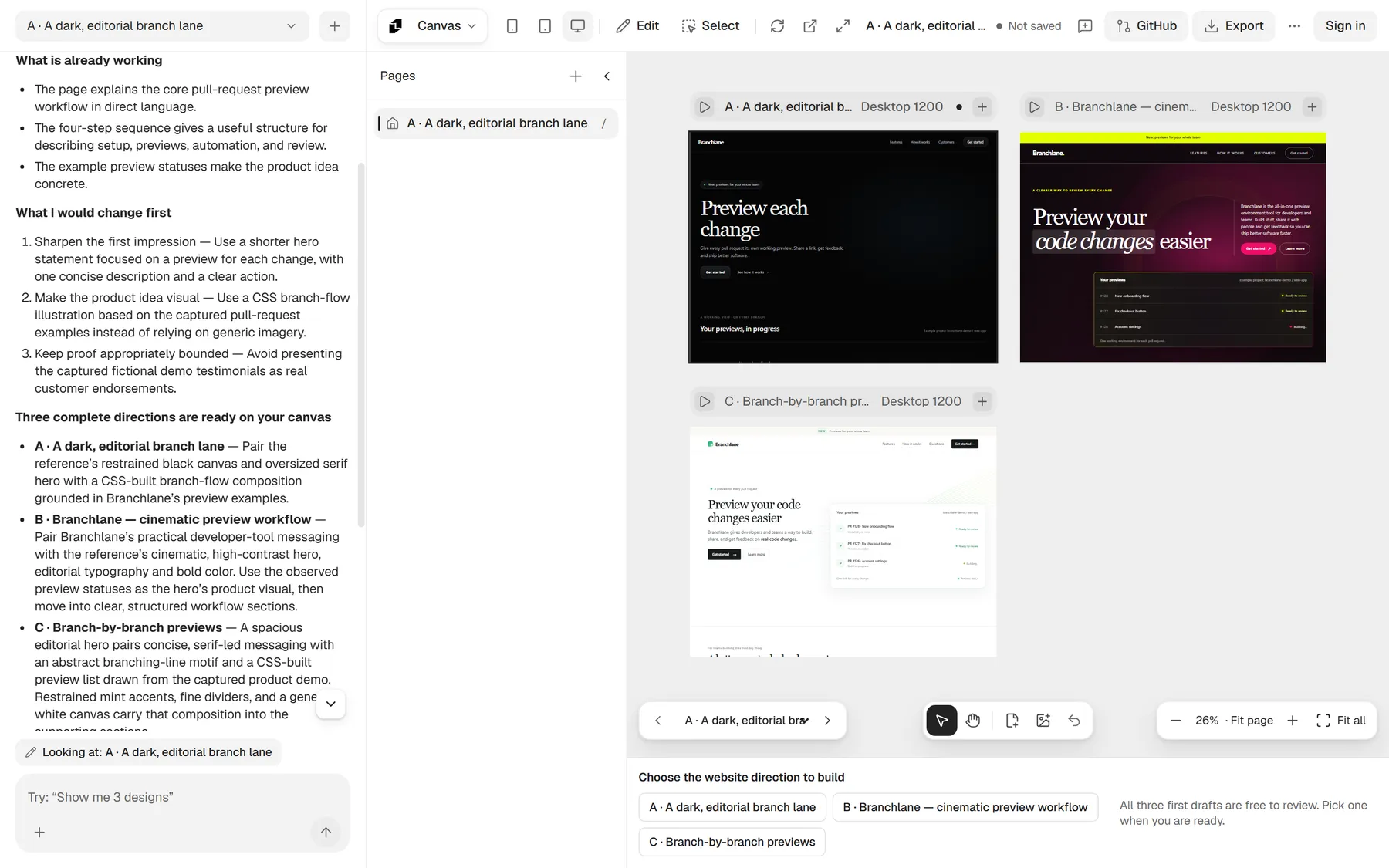
Research
Reads your page, looks for a similar site and links one difference.
Research finished- Business researcherDone: Reads your site. Finds your offer.
- Competitor researcherDone: Names who you’re up against.
- Design scoutDone: Finds layouts that suit you.
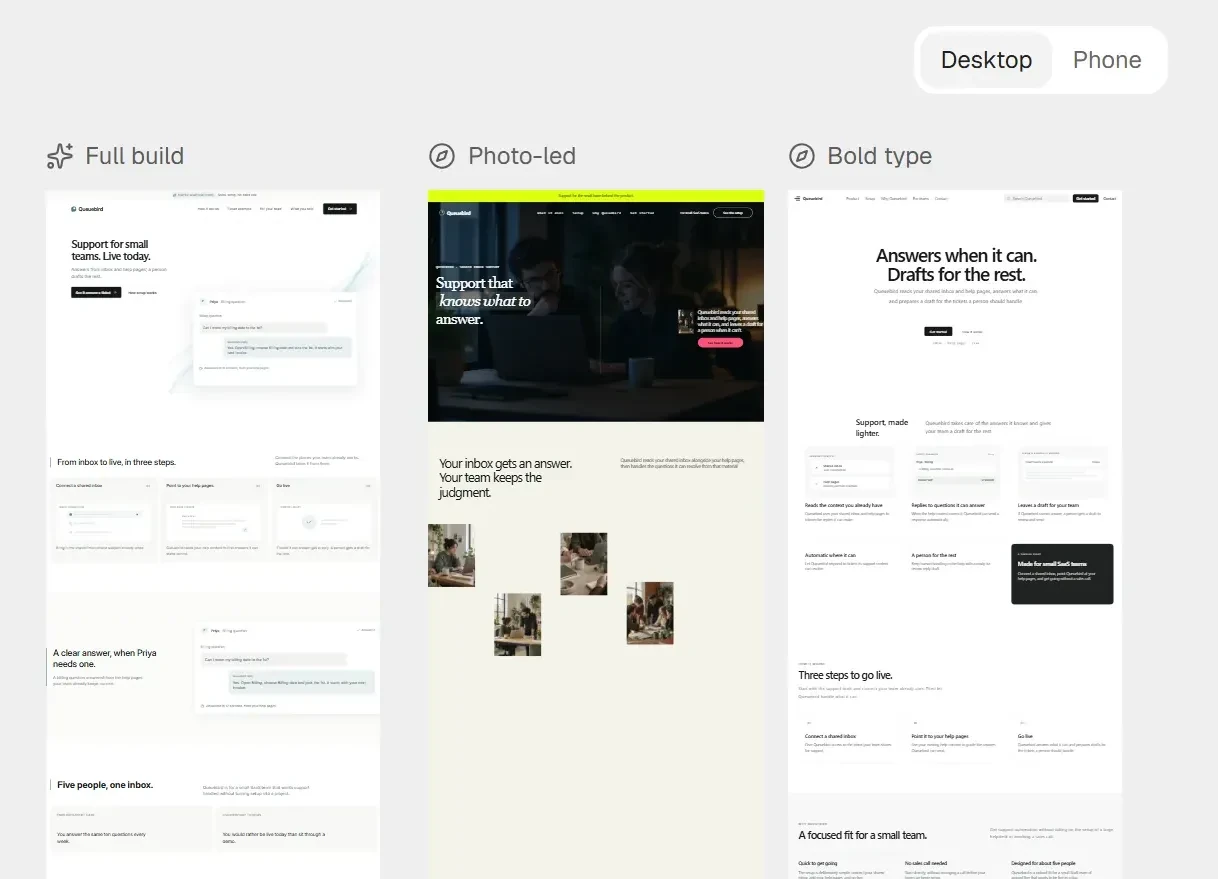
Designs
First drafts of your homepage, built from your own words and images, side by side on the canvas.


How it works

Uncover
Reads your page and any goal you add.

Research
Finds a similar site to compare.

Sharpen
Flags what a stranger would skip.

Iterate
Builds designs from your words and images.

Edit
Changes whatever you point at.

Launch
Exports the HTML or opens a pull request.


Questions
Is it free to try?
Yes. iter0 shows you the review and the designs before it asks you to create an account. There is a daily limit on free reviews.
What does iter0 read on my site?
iter0 reads the one page you paste: its text, its images and a screenshot. The review also searches the web for a similar site and reads a few design references. iter0 does not read your analytics or ad accounts, or anything behind a login.
Does iter0 change my live site?
No. iter0 only reads the public page. The designs stay in the builder until you export one or open a pull request yourself.
Will the designs copy other sites?
No. Each design takes its layout and pacing from a top site. The words and images come from your page, and the reference’s names, copy and logos stay out.
Which pages can iter0 review?
iter0 reviews any public page: a startup landing page, a pricing page, a product page. It reviews one page at a time, so pick the one you most want visitors to act on. Pages behind a login and private addresses can’t be reviewed.
How is the review different from an SEO audit?
An SEO audit checks tags, speed and broken links; the iter0 review asks what a first-time buyer would: is the offer clear, is the proof believable, is the next step obvious. It then shows designs that act on the answers.